Lightweight headless CMS with GraphQL & REST (2026)
Lightweight headless CMS on your own database: GraphQL and REST APIs, schema reviewed like code, self-host or cloud. Compare with Strapi and Directus.
Headless · Multi-channel · Schema-driven
A lightweight headless CMS is a content API with a small admin: you model content, publish GraphQL and REST, and render it in your own frontend. Apito keeps schema changes as a draft until a person reviews the plan and publishes, and you can self-host the Engine or use Apito Cloud.
Read the full lightweight CMS vs headless CMS comparison.
What makes Apito a lightweight headless CMS
GraphQL and REST from the schema
Models are the source of the generated GraphQL API and the REST shim. You call them after publish.
Schema reviewed before it is live
Changes stay a draft. Console shows the plan on Schema Changes, and a person publishes. The CLI does not publish for you.
Self-host or Apito Cloud
Run the open-core Engine on your host with the CLI or Compose, or use Free Cloud and Pro on Apito-managed hosts.
Console for models, not a site builder
The same Console designs models, reviews the draft, and publishes. Your frontend stays outside Apito.
Lightweight headless CMS vs Strapi and Directus
Strapi alternative · Directus alternative
| Apito | Strapi | Directus | |
|---|---|---|---|
| API style | GraphQL plus a REST shim, generated from models | REST and GraphQL from the Content API | REST and GraphQL on the connected database |
| Database ownership | Project database follows the model plan you publish | SQLite, MySQL, MariaDB, or PostgreSQL that Strapi creates. Not a pre-existing database | Your SQL database (Postgres, MySQL, SQLite, SQL Server, Oracle, or CockroachDB) |
| Admin / editor UI | Console for models, schema review, and publish | Admin panel with Content Manager and Content-type Builder | Data Studio for content, files, and users |
| Self-host | Open-core Engine on your host, or Apito Cloud | You install and run the Strapi app | Docker on your infrastructure, or Directus Cloud |
Ready to build with our CMS?
Start building with a lightweight headless CMS and GraphQL + REST content APIs.
Design Your Database Schema Visually
Create and manage your database models with Apito's intuitive visual schema designer. Build complex relationships and data structures without writing SQL.
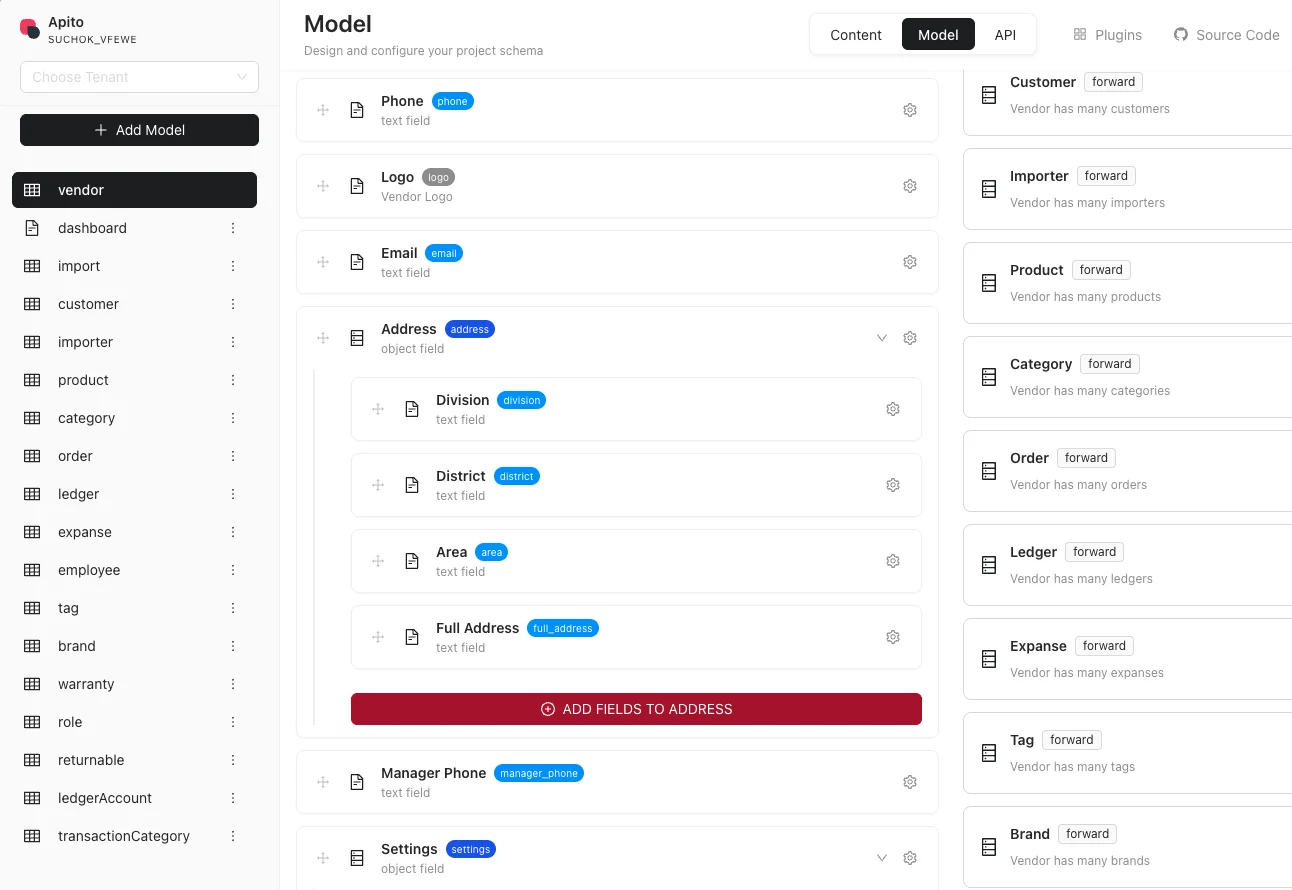
Visual Schema Designer
Drag and drop interface to create tables, fields, and relationships visually
Auto-Generated APIs
GraphQL and REST APIs are automatically generated from your schema design
Relationship Management
Define complex relationships between models with one-to-one, one-to-many, and many-to-many
Lightweight CMS & API tools
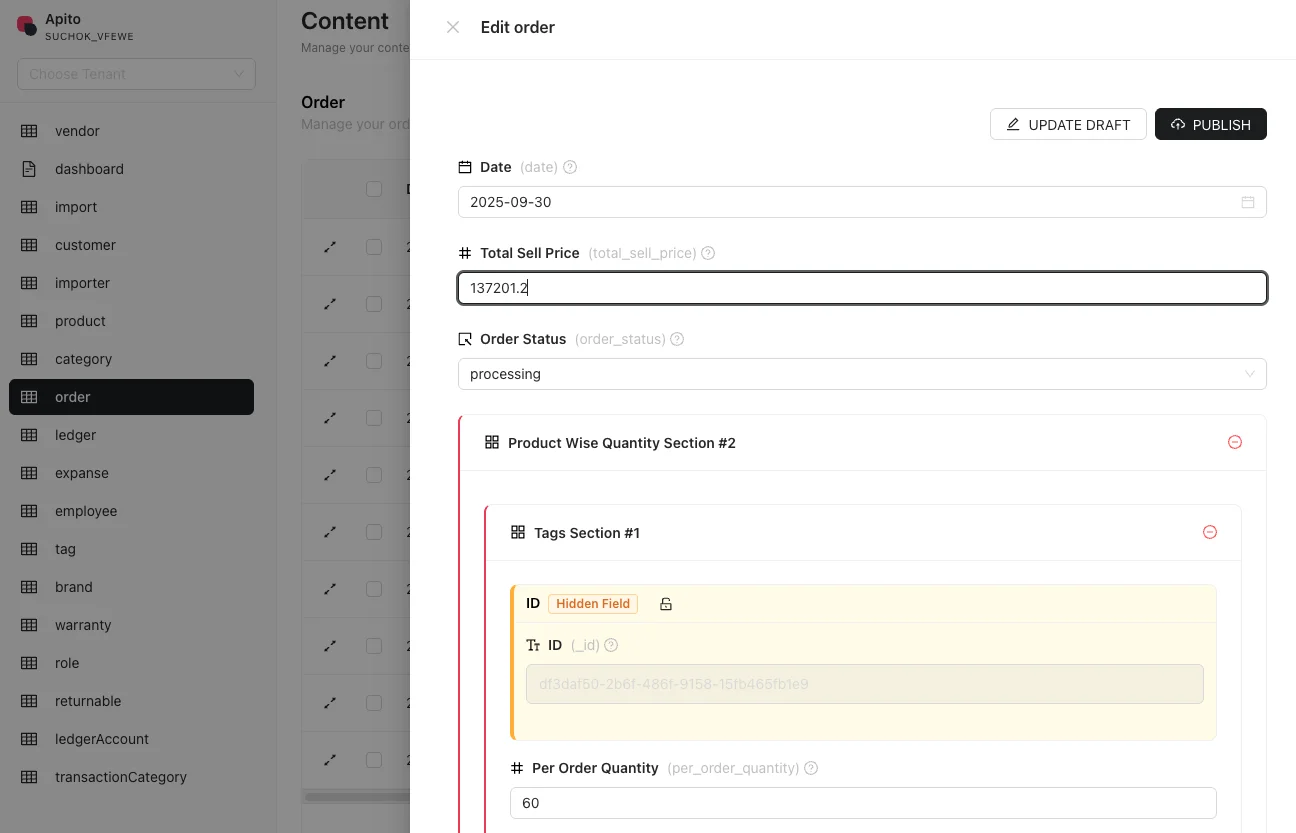
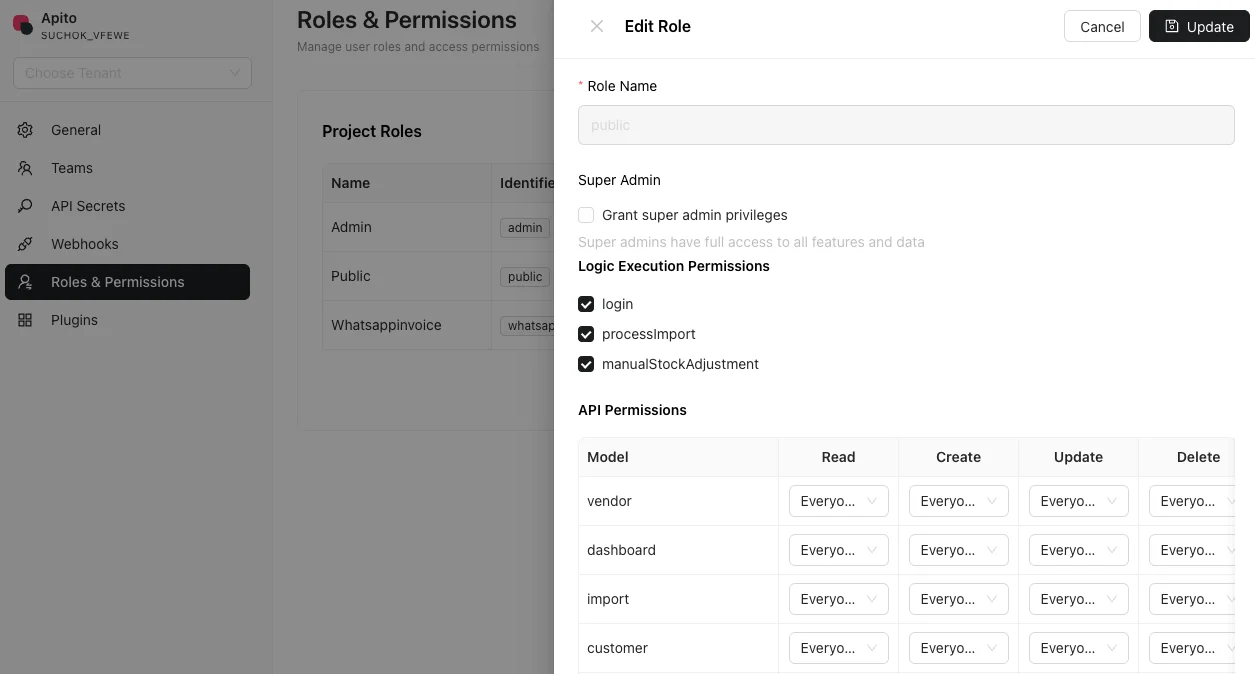
Unlimited Possibilities with Custom Plugins
Apito is designed to be infinitely extensible. Use community plugins for common needs or build your own custom plugins in any language. The possibilities are truly unlimited.
Popular Community Plugins
Authentication
JWT, OAuth, SAML integration
File Storage
AWS S3, Google Cloud, local storage
Email Service
SendGrid, Mailgun, SMTP support
Database Sync
Real-time data synchronization
Rate Limiting
API throttling and protection
Caching
Redis, Memcached integration
Build Your Own Plugins
Create custom plugins in your favorite programming language. Our plugin SDK provides everything you need to extend Apito's functionality exactly how you want it.
Supported Languages
Simple Plugin Development
Ready to Extend Apito?
Join our community of developers building amazing plugins and extensions.